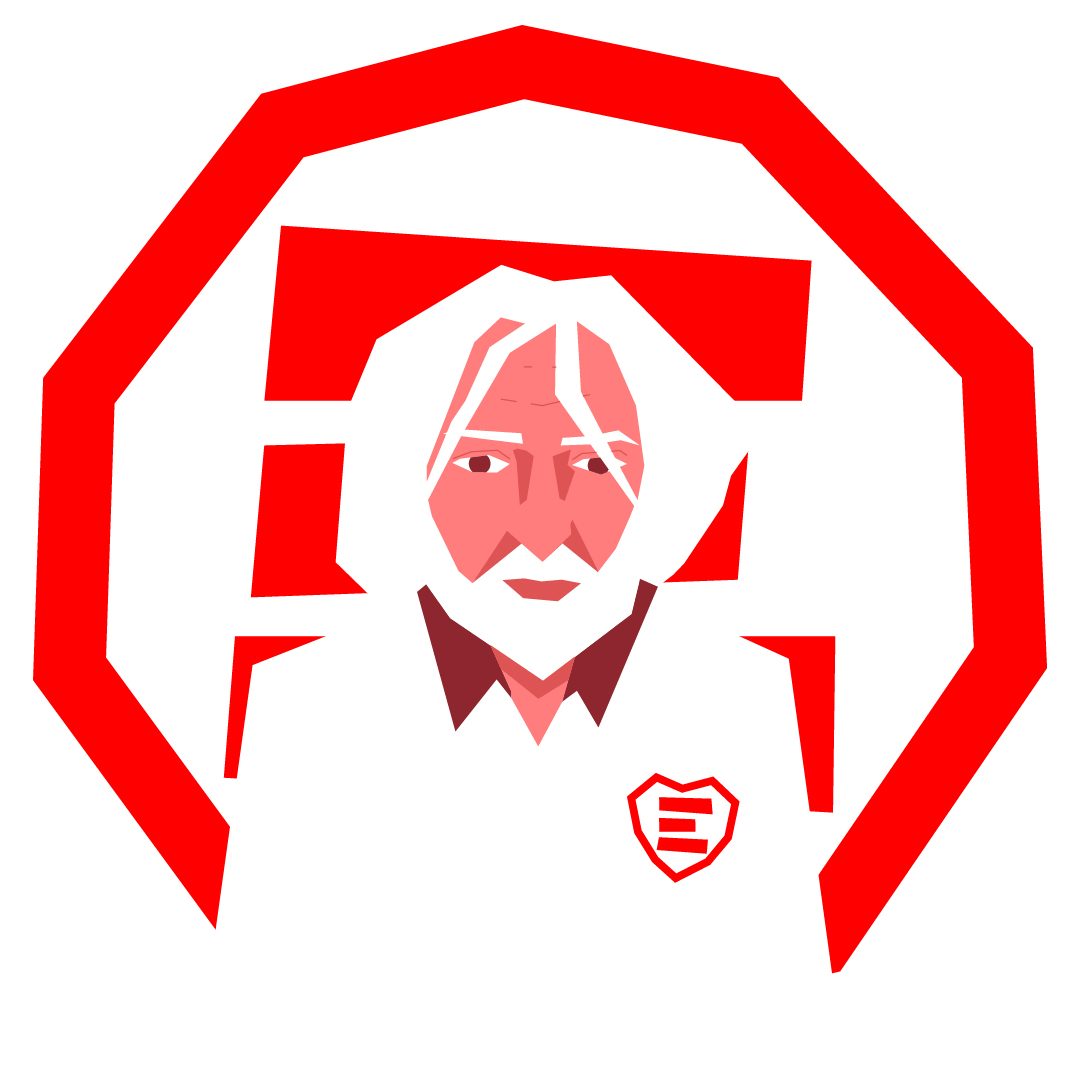
FIGHTING WITH A SMILE – DON PINO PUGLISI
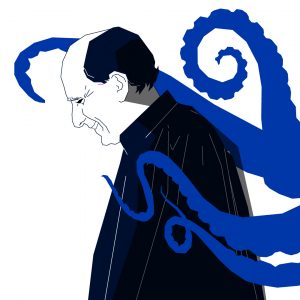 The mafia phenomenon known as COSA NOSTRA is an age-old and perennial problem for Sicily.
Since the second half of the nineteenth century, this octopus has spread its tentacles first over the island, then expanding throughout the nation until reaching most Western countries.
Even today, this phenomenon persists, albeit in a more subtle and hidden manner, thanks to greater awareness and knowledge among citizens and the competent authorities who fight it every day, such as the young people of ADDIOPIZZO and the LIBERA association, to name just a few.
But there was a specific historical period in which Cosa Nostra was the absolute protagonist, a period in which nothing was known, or wanted to know, about the octopus.
A period of bloodshed and mystery during which the Sicilian Mafia reached its peak of expansion, even going so far as to shake hands with politicians and deviant elements of the state.
Let's talk about the twenty years from the early 70s to the late 90s.
In those years, the Corleonesi, led by Totò Riina, the infamous Boss of Bosses, were in charge. He had unleashed an unprecedented war between mafia families, filling Sicily, one of the most beautiful islands in the world, with heroin, blood, and lead.
But they were also the years in which some people tried to stop and fight openly the "octopus" that was suffocating the island and the whole of Italy:
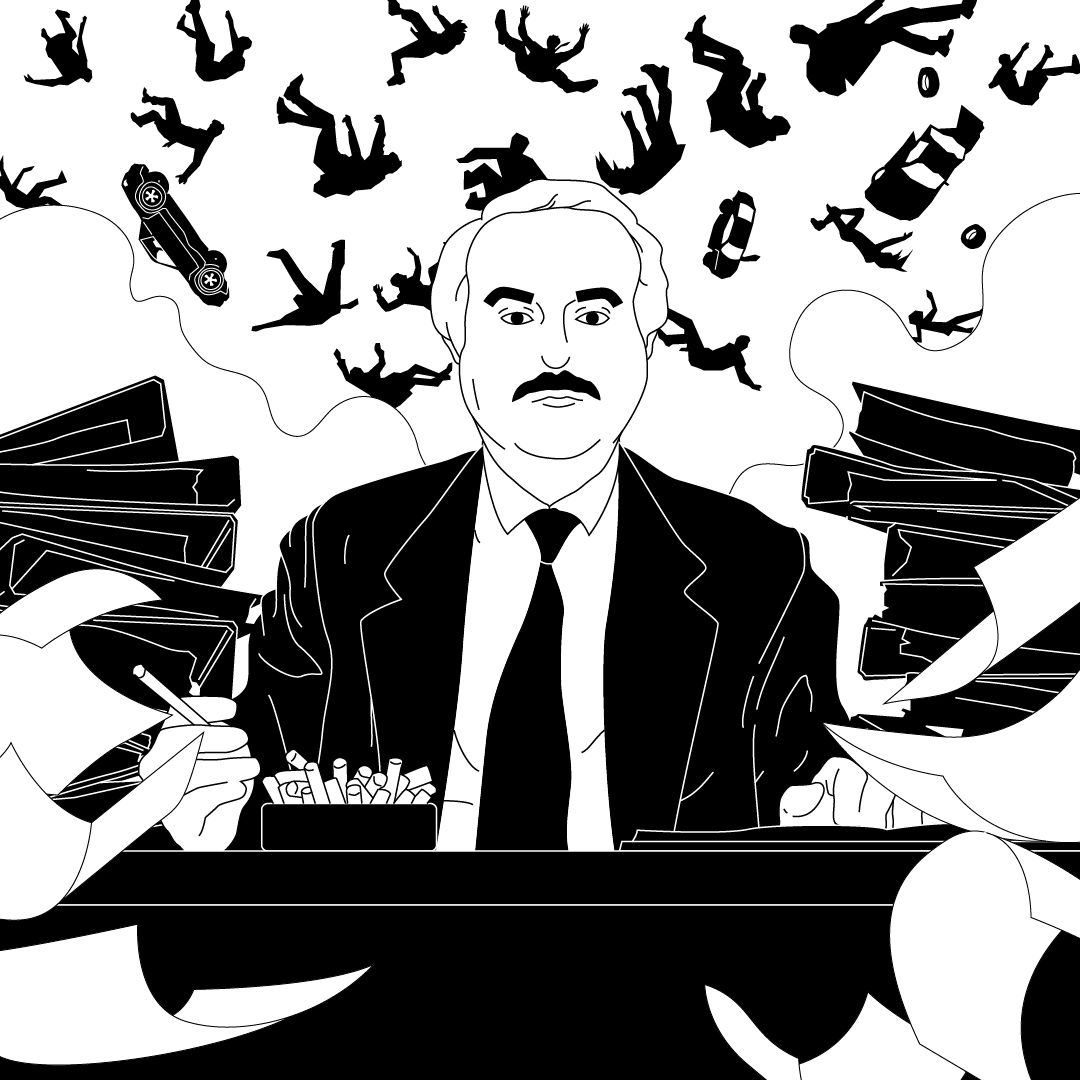
Giovanni Falcone
Paolo Borsellino
Carlo Alberto dalla Chiesa
Boris Giuliano
These are just some of the names who fought against Cosa Nostra.
Judges, police officers, Carabinieri, and generals. Modern-day Courageous Captains who gave their lives to push the octopus back into the muddy abyss from which it emerged.
The mafia is a human phenomenon and like all human phenomena it has a beginning, its evolution and will therefore also have an end.
Giovanni Falcone
But there was one man who, more than anyone else, shook this mafia structure to its foundations, a man who, to fight it, didn't take up trial papers or weapons, but only words and, above all, his smile.
Because this man was not a state or military authority, this man was a priest.
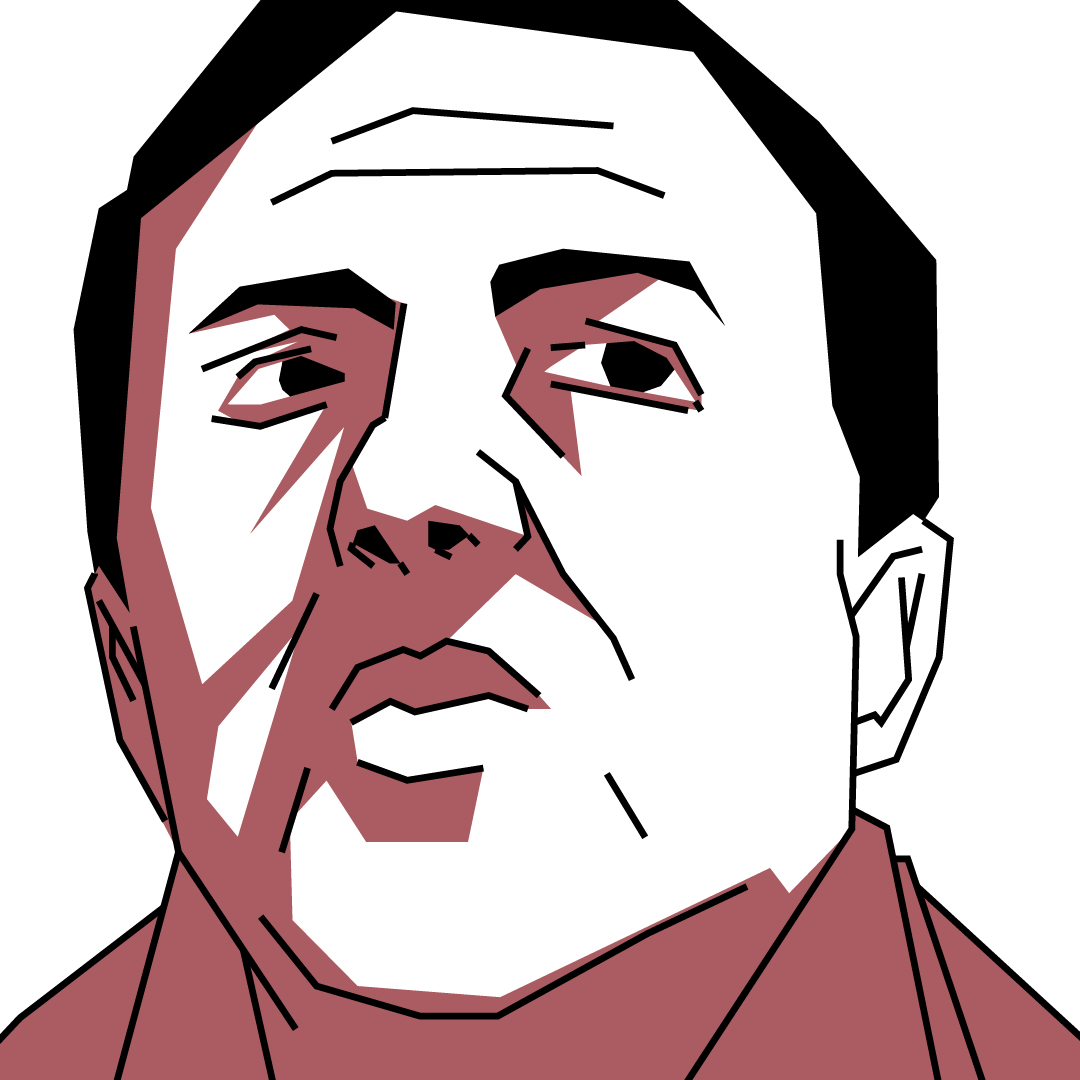
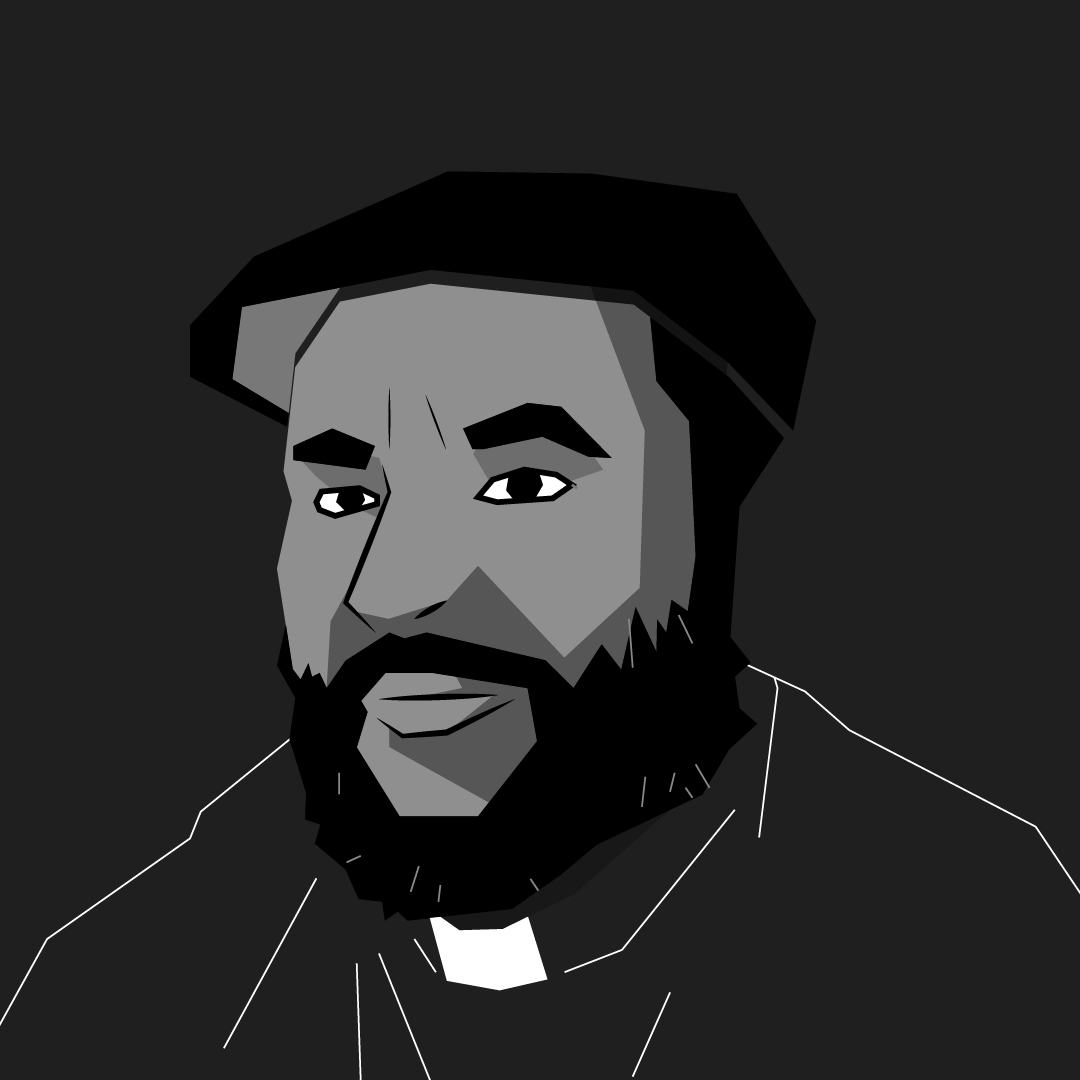
This man was Don Pino Puglisi.
Don Pino Puglisi
THE PRIESTHOOD AND THE FIRST ENCOUNTER WITH THE MAFIA
Don Pino Puglisi, born Giuseppe, was born on September 15, 1937 in Brancaccio, on the outskirts of Palermo, to a modest family (his father was a shoemaker and his mother was a seamstress).
He entered the seminary in 1953 and became a priest on July 2, 1960.
On October 1, 1970, he became parish priest in Godrano, a municipality in the province of Palermo, where Don Pino had his first contact with Cosa Nostra.
For many years now, a bloody feud between mafia families for control of the territory has been raging in Godrano.
As already mentioned, the Mafia problem in Sicily is ancestral, as are the grudges that members of mafia families carry with them. The slightest thing—a wrong remark, a slight injustice, an unrequited favor—is enough to spark a war that involves not only those directly involved, but also relatives, and that continues for generations.
This is the case of the Godrano feud in which, among the victims, there was also a child of just 10 years old.
Don Pino immediately senses the climate of fear, not at all hidden in reality, that pervades the village.
When you live in a town where the mafia rules, especially if there is a war between clans, it's like living in a limbo with its own rules:
People are careful about who they greet and how they greet them. They don't waste time in small talk because every single word spoken can decide the fate of the person who utters it, every gesture, every look can make the difference between life and death; even children, the creatures least affected, aren't spared.
This is the climate in Godrano and Don Pino knows it well.
What disturbs him most is the fact that young people are an integral part of this feud, they are often used by the Mafia as couriers or postmen, when they are of the right age (13/15 years old) they begin the apprenticeship to become soldiers of Cosa Nostra, they are taught that only in this way will they gain respect, only by shooting will they make a career.
But what can a priest do to stop all this?
How can we put an end to such an ancient feud?
Don Pino has only words and smiles on his side, so he decides that those will be the weapons he will use to try to stop them.
Get started right away.
In church his sermons are all about the importance of forgiveness, every single day he does nothing but preach this, he talks about this and he talks about young people.
For him, young people become a real mission.
It doesn't matter if a young man has committed a crime or if that other is the son of some boss, for Don Pino they are just young people, kids who have lost their way but still worthy of reclaiming their adolescent identity.
Soon there will be no shortage of threats, accusations, and retaliation, but the priest with the perpetual smile does not stop; in fact, he increases the dose. He no longer limits himself to the homily in church, but speaks about it in the street, at the bar, at the market, and even to the mothers and wives of so-called men of honor.
Well, a word, if pronounced by someone who embodies its meaning, can have a decisive weight, far greater than that of lead.
The words of a modest parish priest reach the ears of the Godrano bosses who begin to listen to him, seeing in this priest so good with young people someone atypical and all in all respectable.
Don Pino becomes the peacemaker, managing to reconcile the two warring families, thus putting an end to a feud that had begun more than 40 years earlier and saving the lives of numerous young people.
Don Pino surrounded by the boys of Godrano in 1971
"When he arrived in Godrano, he immediately aroused a certain curiosity because he wasn't wearing a cassock, he was skinny, he wandered the streets and, with great ease and that iconic smile of his, greeted everyone, even... them. Father Puglisi was a priest, of course, but he was also a friend, always willing to help and listen to others, to share a piece of bread, anything."
One of the boys from Godrano
THE RETURN TO BRANCACCIO AND THE FIGHT AGAINST THE MAFIA
On July 31, 1978, Don Pino left Godrano and until 1990 held many different positions: pro-rector of the juvenile seminary in Palermo, director of the Regional Vocations Center and member of the national council, teacher of mathematics and religion in various institutes and animator at various Catholic organizations.
On September 29, 1990, he was appointed parish priest in Brancaccio, the neighborhood where he was born and where he couldn't wait to return, but also the infamous neighborhood ruled by the Graviano brothers' gang, linked to the Bagarella mafia family and therefore extremely close to Riina's Corleone faction.
The early 1990s were years of intense turmoil within Cosa Nostra. The Maxi Trial had concluded a few years earlier (February 10, 1986, first instance), and the octopus had emerged with its tentacles severed. The revelations of informer Tommaso Buscetta, the "Boss of Two Worlds," brought heavy sentences to the Mafia: 19 life sentences and prison sentences totaling 2,665 years. Riina, Provenzano, and Bagarella himself were fugitives, and the criminal organization was forced to seek new manpower to continue its operations.
Repentant Tommaso Buscetta testifies at the Maxiprocesso in the bunker courtroom set up under the Palermo prison, 3 April 1986
And where else can you find it if not in the suburbs where people struggle to put food on the table?
Brancaccio is one of the neighborhoods that most swells the ranks of Cosa Nostra, and it is always the young people who are recruited.
Don Pino immediately began his anti-mafia work, focusing primarily on the rehabilitation of adolescents already recruited by the mafia. He sees them as people, not as mafiosi, and treats them as young people. He makes them understand, always with dialogue and a smile, that life has not yet closed its doors and that a clear path lies ahead, and only their attitude will determine their destination.
Little by little, more and more teenagers are drawn to the charisma of this parrinu chi cavusi, a priest in trousers—so called because he always wore a cassock when walking the streets—to the point that they begin to help spread his message.
On January 29, 1993, Don Pino and his young people inaugurated the “Padre Nostro” center for the children and adolescents of the neighborhood where, through various activities and games, he managed to make them understand that one can be respected without being a member of the mafia, but by believing in one's ideals.
Don Pino also worked as a citizen to redevelop his beloved Brancaccio, promoting the creation of a health center, the repair of the sewers, the construction of a middle school, and a literacy program for all residents. His homilies were always addressed to the mafiosi and their forgiveness, in a path aimed at openness rather than closure, freedom rather than fear.
The residents of Brancaccio see him as a guiding light, a helping hand to escape hell. Not a legend, but a man who, with his smile and his way of seeing everyone as a human being, regardless of their cultural background, managed to become an example of humanity and hope in a neighborhood where, in the aftermath of the Capaci massacre, children shouted in the streets, "We won! Long live the mafia!"
A man who, through his example, managed to deal a decisive blow to Cosa Nostra, depriving it of its workforce and thus of its very legs.
I am not afraid of the words of the violent, but of the silence of the honest.
Don Pino Puglisi
THE LAST SMILE
On May 23, 1992, near Capaci, 500kg of TNT tore through the A29 motorway, killing Judge Giovanni Falcone, his wife Francesca Morvillo, and his escorts Vito Schifani, Rocco Dicillo, and Antonio Montinaro.
the remains of Via D'Amelio in Palermo, on 19 July 1992, after the explosion of a car packed with TNT which cost the lives of judge Paolo Borsellino and his escort agents Agostino Catalano, Emanuela Loi, Vincenzo Li Muli, Walter Cosina and Claudio Traina
When you strike a mafia organization deeply, you get the same effect as a wounded animal.
The beast is frightened but for this very reason it becomes more aggressive, Cosa Nostra was like that, wounded and very aggressive to the point of declaring war on the State.
The Capaci and Via D’Amelio massacres are the most tragically clear example of this.
Don Pino is also not without threats and intimidation; his words and actions are dangerous for the mafia, which, as already mentioned, sees its children and young people being taken away.
But he, as we know, does not stop and the beast reacts: Don Pino is now an obstacle to be eliminated.
It is the night of September 15, 1993, the day of his 56th birthday, Don Pino returns from his activities, parks his white Uno and heads towards the front door.
It's 8:40 PM.
A sound of footsteps behind him, then someone calls him, he turns, more footsteps behind him, he is surrounded.
Don Pino spreads his arms and utters his last sentence: “I expected it.”
A gunshot to the back of the head, then silence.
Thus dies a man who was able to see beyond the rubber wall that is Cosa Nostra, who was able to see in the eyes of those boys a light that was invisible even to themselves.
A man who remained human despite the silence he inhabited, while for many, killing or being killed was the only sensible choice.
After his arrest, Don Pino's murderers embarked on a journey of repentance and conversion based on the last image they had of Don Pino, which is well described in their own words:
The arrest of Gaspare Spatuzza, one of Don Pino's assassins, on July 2, 1997
He was smiling, after shooting him we approached to see if he was dead, Don Pino had his arms open and was smiling.