YOU ONLY DIE ONCE – GIOVANNI FALCONE
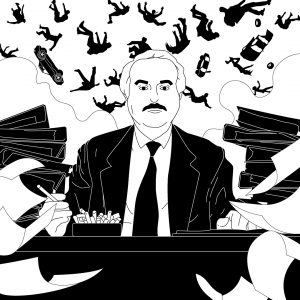 COSA NOSTRA: THE MAFIA THAT DECLARED WAR ON THE STATE
The history of the Sicilian Mafia, or rather, that of Cosa Nostra, is an ancient and complex one, so complex that studying its entire genealogy would require a dedicated degree program.
According to the historian and academic John Dickie (author of several essays on the history of the Mafia), Cosa Nostra was the result of that combination of conspiracy theories, revolutionary violence, and para-Masonic secret societies that characterized the Risorgimento in the Kingdom of the Two Sicilies.
A story that dates back to before the unification of Italy and that still today writes pages and pages of the news of our country but which had its sad and bloody peak between the 60s and the 90s.
Between 1960 and 1970, Palermo was the scene of what newspapers later reported as “the first mafia war,” which saw Palermo families clash with families from the province and other provincial capitals.
The early 80s saw the rise of the Corleonesi, led by Totò Riina, Bernardo Provenzano and Luciano Leggio, who, in order to reach the top of the criminal organization and monopolize the drug trafficking business, unleashed the bloodiest mafia feud that Sicily has ever seen.
As if this were not enough, the Corleonesi, through high-profile murders, collusion, and terrorist acts, declared war on the State, a no-holds-barred war that saw many magistrates, members of the police force, journalists, and civilians take to the field to counter its ferocious hegemony and set an example of legality, courage, and humanity.
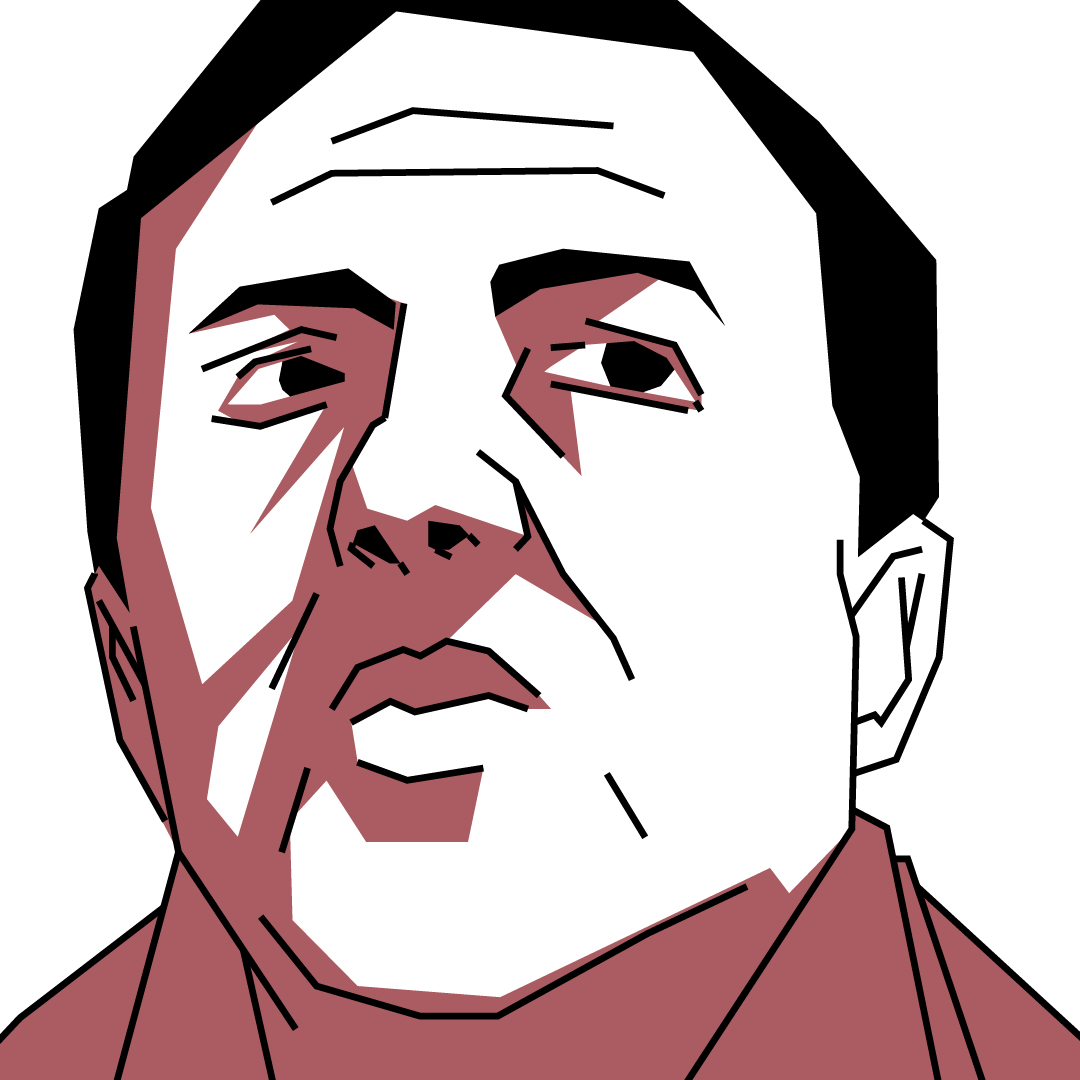
One of these courageous men was without a doubt Giovanni Falcone.
The Mafia is a human phenomenon, and like all human phenomena, it has a beginning, an evolution, and therefore will also have an end. I only hope that the end of the Mafia doesn't coincide with the end of humanity.
Giovanni Falcone
THE BEGINNING OF EVERYTHING.
Giovanni Falcone arrived in Palermo in July 1978 after a career in the civil section of the Court of Trapani, where he initially dealt with civil law.
But his keen investigative genius, his sense of justice, and his immense love for his work soon led him to take a long and perilous detour toward what would become the anti-mafia movement.
One of the triggering factors that convinced Falcone to take this path was the murder of the judge Cesare Terranova in 1979, after a brief reflection, Giovanni Falcone accepted the proposal of Rocco Chinnici to move to the Investigation Office of the criminal section of Palermo where he also took part Paolo Borsellino and which under the guidance of Chinnici himself soon became an example of judicial efficiency.
In 1980, the then Palermo chief prosecutor Gaetano Costa signed 56 arrest warrants against the construction entrepreneur Rosario Spatola, accused of being part of a drug trafficking ring between Sicily and the United States on behalf of the Inzerillo and Gambino mafia families. Falcone was called to handle the case.
FOLLOW THE MONEY: THE FALCONE METHOD.
Falcone threw himself headlong into the case, studying the documents with methodical precision, creating connections, tracing threads that until then had remained invisible even to the most skilled magistrates of the time.
It was while investigating the Spatola case that Falcone's investigative genius was ignited.
He understood that to investigate mafia associations it was necessary to follow the money, that is, to initiate asset and banking investigations, reconstructing the route of drug-related money in order to map its movements.
He noticed that all the drugs in Palermo were being sold in the United States, so he began calling the directors of the banks in Palermo and the province asking them to send him all the currency exchange slips from 1975 onwards.
Thus, thanks to bank checks, searches, thorough investigations, and above all his genius, Falcone was able to glimpse for the first time the shadow of a huge criminal organization capable of managing drug trafficking on a global scale, an organization that until then had been perceived as a "local" phenomenon linked mainly to individual cases of petty crime.
Falcone, thanks to his method, will investigate and uncover mafia connections between Sicily and the USA through the investigation that has become historically known as the "Pizza Connection," and even ascertain the collusion of banker Michele Sindona.
The Education Office would gain increasing prestige thanks to the successes of Falcone and Borsellino, while Chinnici began to theorize the foundations of what would become the anti-mafia pool.
On August 6, 1980, the prosecutor Costa, the same one who had signed the warrants that had started everything, was killed in a mafia ambush. From that moment on, Falcone always traveled under police protection.
Giovanni Falcone and Rocco Chinnici at the time of the Education Office
THE POOL AND THE MAXI: THE GOLDEN YEARS OF ANTI-MAFIA.
As mentioned previously, thanks to the tireless work of Chinnici and his team, the Palermo Investigation Office gained increasing prominence. Many arrests and trials followed the work of Falcone and Borsellino, which forced Cosa Nostra to react, and it did so in the most clear and violent manner.
It was 8 am on July 29, 1983. Rocco Chinnici was leaving his house, with three of his bodyguards waiting for him. A Fiat 127 parked outside the house, packed with 75 kg of TNT, exploded at that moment, leaving the mutilated bodies of two of his bodyguards, the building's doorman, and Judge Chinnici on the ground.
What remains of Via Pipitone after the attack on Judge Chinnici.
It became clear to Falcone that the magistrates' work had had a profound impact, that the mafia organization had been wounded, that he could not and must not stop, that he had taken the right direction on a road that was still long, but that he would follow it to the end, to the very end.
He was succeeded at the helm of the Education Office Antonino Caponnetto, who put Chinnici's idea into practice in the anti-mafia pool.
The anti-mafia pool was a team made up of four investigating judges (Falcone, Borsellino, Leonardo Guarnotta and Giuseppe di Lello) with the task of exclusively coordinating mafia investigations, thus centralizing all the material collected over the years in order to avoid dispersion and external contamination.
Guided by Falcone's experience and his method, the team divided the work effectively: Falcone and Guarnotta followed the flows of money from drug trafficking, di Lello dealt with murders and other minor mafia-related crimes, and Borsellino focused exclusively on "high-profile crimes."
A working method, the one implemented by Giovanni Falcone, which will prove successful.
As already mentioned, in those years Palermo was shaken by the Second Mafia War perpetrated by the Corleonesi and their allies against the old Palermo families.
That feud flooded Sicily with blood; there was no escape. Many relatives, even distant ones, of the bosses of the losing faction were massacred, including almost the entire family of Tommaso Buscetta, the boss of two worlds.
Falcone went to Brazil, the country where Buscetta had taken refuge, to interrogate him and immediately sensed that the man had shown signs of potential and that Buscetta might be able to collaborate.
He requested extradition and secured the boss's transfer to Italy. Once again, the judge had foresight, because upon arriving in Italy, Tommaso Buscetta, now exhausted and resentful toward Cosa Nostra, immediately decided to cooperate on one condition: he would speak only with Judge Giovanni Falcone.
The statements Buscetta made confirmed the intuitive brilliance of Falcone who, together with his colleague Borsellino, conducted the famous Maxi Trial (a document of 8,000 pages), all of which was held in the guesthouse of the Asinara prison for security reasons, given that threatening phone calls against the two judges had been intercepted.
The maxi trial began on February 10, 1986 and concluded, in the first instance, on December 16, 1987 with 360 sentences to a total of 2,665 years of prison plus a fine of eleven and a half billion lire.
Not a slap, but a well-placed knockout punch in the face of the mafia.
A great victory for the team, an exceptional feat for Falcone, who had spent all those years under police protection, under constant threats, sacrificing time for his loved ones, courageously dedicating himself body and soul to one thing only: legality.
But the happiness of those glory days was soon to end.
Tommaso Buscetta ready to testify at the Maxiprocesso
ONE MAN ALONE: THE SEASON OF POISON.
About a year after the Maxiprocesso, Antonino Caponnetto was preparing to leave the anti-mafia team due to seniority. The favorite Giovanni Falcone and magistrate Antonino Meli were nominated to replace him.
After a long and controversial vote, the Superior Council of the Judiciary unexpectedly (at least apparently) appointed Antonino Meli.
The aforementioned appointment sparked bitter controversy, and also made Falcone a much easier target for the Mafia since it sent a clear signal that the magistrate was not as esteemed as previously believed.
From that moment on, Falcone had to face an ever-increasing number of difficulties and obstacles to his investigative activity and to himself.
Meli began a "reverse gear" process, reassigning mafia investigations to local authorities, essentially decentralizing all the work done by magistrates and thus marking the dismantling of the pool, a process that Borsellino would later denounce in a famous interview.
A real ordeal began for Falcone, as he saw important assignments taken away from him and had to constantly endure the hostility of his colleagues, especially Meli, who even denounced a sort of incompetence on the part of Falcone and the members of the pool, accusing them of "having lowered their guard."
The feeling was that some magistrates were acting out of envy of Falcone and his successes in the fight against the Mafia; because, despite everything, he kept going. His passion, his faith in the rule of law, and above all his humanity, led him to achieve further national and international successes in the fight against the Mafia.
By now in open conflict with Falcone, Meli definitively dissolved the Anti-Mafia Pool so from that day on Falcone was a man alone, and Cosa Nostra did not wait.
On June 21, 1989, Falcone, during one of the rare breaks he allowed himself, escaped a bomb attack carried out in his seaside home in Addaura.
A bag containing fifty-eight TNT sticks had been placed on the rocks below the Judge's house with the intention of detonating it as soon as Falcone went down for a swim.
Fortunately, there was no explosion, most likely due to the fact that the button that was supposed to activate everything jammed or, as some theorized, that was just a warning.
But Falcone knew Cosa Nostra well and knew that this was anything but a warning. In a famous interview with journalist Saverio Lodato, Falcone confessed that behind the incident he had perceived what he called "extremely refined minds," theorizing for the first time the collusion between the Mafia and deviant elements of the state.
To top it all off, anonymous letters (some on Interpol letterhead) began circulating inside the Palace of Justice defaming Giovanni Falcone and some of his collaborators, even accusing them of having manipulated the return to Sicily of a repentant mafia official with the aim of unleashing a war against the Corleonesi fugitives.
The absurd event became known as “the Raven Affair.”
Giovanni Falcone was the victim of what is now called DELEGITIMIZATION, a mudslinging operation artfully constructed to strip the intended victim of all credibility.
During an interview on a television program, someone said that he had placed the bomb at Addaura himself, because he wanted to turn the spotlight back on himself. He was accused of being a show-off. A citizen of Palermo even wrote a letter to a newspaper asking if the escort could be revoked because the car sirens were disturbing him every time he moved.
He was attacked by everyone: journalists, free citizens, colleagues and politicians.
His participation in Maurizio Costanzo's show, where he was verbally attacked by Alfredo Galasso and Salvatore Cuffaro, is famous.
But this did not stop either the judge or the man Giovanni Falcone was:
he increasingly focused on high-profile crimes, especially given his prophetic intuition in which he saw the Mafia and part of the State shaking hands.
The then Vice President of the Council, Claudio Martelli, proposed him to the director of the Criminal Affairs section of the ministry in Rome, where he drafted a 900-page report declaring that a sort of mafia-politics-business triumvirate had formed a business committee for the grabbing of funds and public contracts.
In Falcone's eyes, it was now clear that some politicians and high-ranking state officials were business partners of Cosa Nostra and therefore the famous "extremely refined minds" that he had glimpsed.
In response to his arguments, Falcone proposed establishing a National Anti-Mafia Prosecutor's Office, or the so-called "Super Prosecutor's Office." This institution would be empowered to fight mafia organizations nationwide and would coordinate all investigative and countermeasure activities from a single point of view, thus returning to the methodology that distinguished the pool.
Needless to say, the issue raised controversy among the judiciary and among politicians, who in the meantime were beginning to tremble at having found themselves in the open field.
But for once, during this toxic period for Falcone, his commitment, his perseverance, and his ability to remain human in the face of those who sought to bring him down rewarded the man who had dedicated his life to legality with such sacrifice.
The establishment of the Super Prosecutor's Office was approved on November 20, 1991.
Now Cosa Nostra, already seriously wounded by the Maxi Trial, found itself facing a giant ready to fight to the end. This time it was a two-horse race that the Mafia could not afford to lose.
We are dealing with highly sophisticated minds attempting to influence certain Mafia actions. Perhaps there are connections between the Cosa Nostra leadership and hidden centers of power with other interests. I have the impression that this is the most plausible scenario if one truly wants to understand the reasons that drove someone to murder me.
Giovanni Falcone
IDES OF MAY
Cosa Nostra is hunted, bleeding, frightened... but no less ferocious for that.
Falcone had gone too far. Totò Riina, from his position as a fugitive, issued his verdict: "Giovanni Falcone cannot be the biggest cop of all. Giovanni Falcone must die."
In May, in Sicily, it's already beach time. The sun embraces Mondello beach in Palermo, the sand is light and soft, the sea is calm, and the view is fantastic.
On Saturdays, it's very crowded, as usual, with children's laughter mingling with the songs of street vendors, people in the bars consuming granitas and iced drinks, people playing table football and beach volleyball, everything normal, everything is fine.
Suddenly, around six in the evening, the cheerful chatter is shattered by a roar, it feels like an earthquake, then everything goes silent, not even the street vendors sing anymore...
Giovanni Falcone landed at Punta Raisi airport at 4:45 pm on Saturday 23 May 1992. As soon as he got off the plane from Rome, he got into the white Lancia Thema he wanted to drive that day, with his wife Francesca Morvillo on board with him.
They set off towards Palermo, with him in the centre, with two other Lancia Themas carrying the escort in front and behind.
Behind them, the mafioso Gioacchino La Barbera follows them secretly in telephone contact with the attackers, fate awaits them ahead.
It's 5:58 PM, Falcone and his escort are passing the Capaci junction, La Barbera hangs up the phone, from a farmhouse on a hill at the side of the road, Giovanni Brusca puts his finger on the remote control and detonates 1000 kg of TNT that had previously been placed under the highway: very little will remain of the Lancia Thema.
In addition to Giovanni Falcone, his wife Francesca Morvillo, also a magistrate, and his bodyguards Antonio Montinaro, Vito Schifani, and Rocco Dicillo also died in the Capaci massacre.
Falcone's funeral will be marked by many expressions of affection and just as many insults towards the State and Politics, testifying that this man, so faithful to the law, so stubborn, so courageous in remaining human even in the face of the worst defamations, human in the betrayals he suffered, human in the sacrifice he made, that man left alone in his battle, that man, in the end, won.
The remains of the highway, near Capaci after the explosion that cost the lives of Judge Falcone, his wife and the escort agents
the funerals of Giovanni Falcone, Francesca Morvillo and the officers Montinaro, Schifani and Dicillo
He who remains silent and bows his head dies every time he does so; he who speaks and walks with his head held high dies only once.
Giovanni Falcone