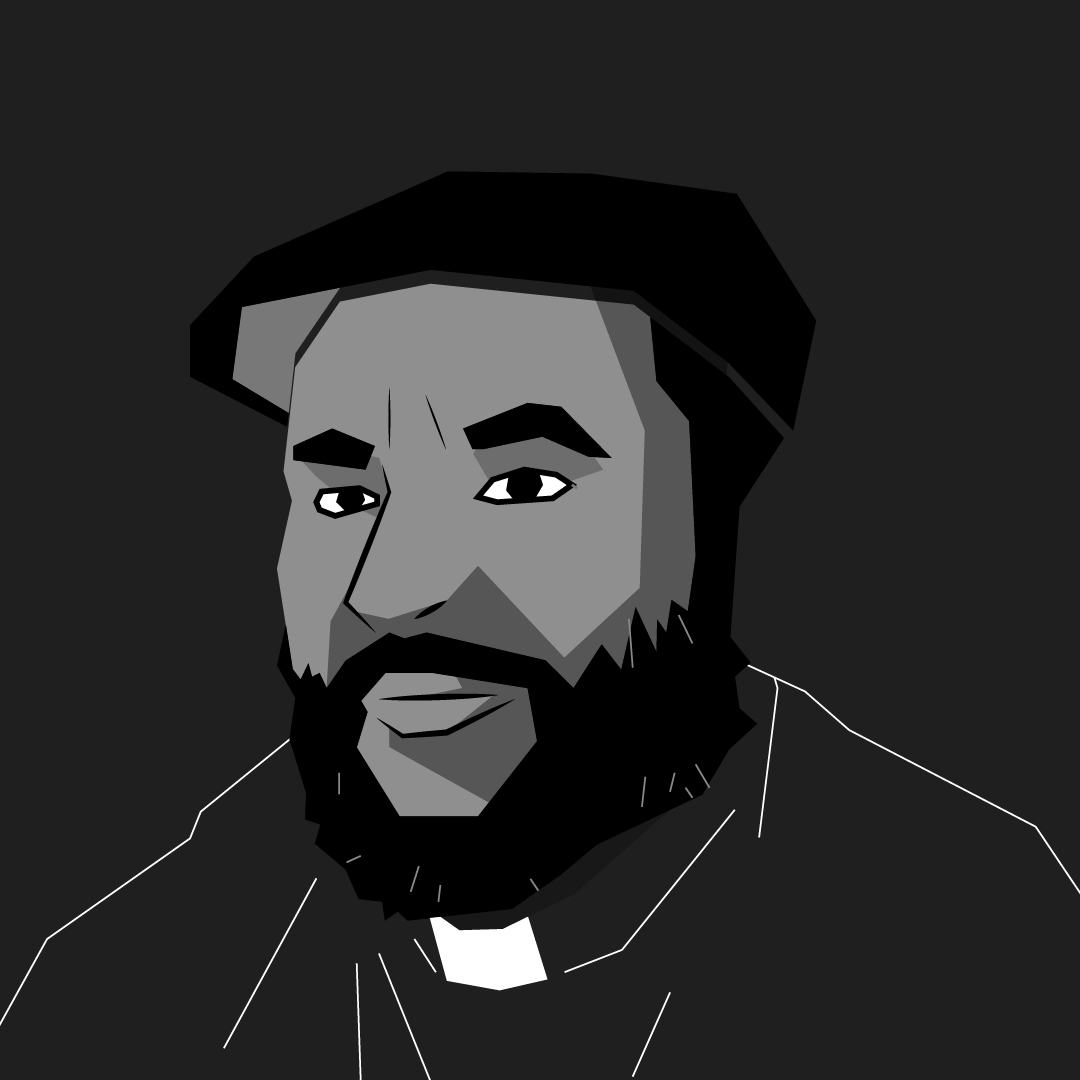
WITNESS TO THE ARMENIAN GENOCIDE – ARMIN THEOPHIL WEGNER
 “I know that in this way I am committing an act of high treason, and yet the knowledge that I have contributed a small part to helping these poor people fills me with more joy than anything else I have done.”
When it comes to defining what it means to #remainhuman, it's hard to find a more fitting example than Armin T. Wegner. From his birth in Wuppertal, Germany, on October 16, 1886, his entire life was shaped by the pursuit of justice: his law degree, his enlistment as a volunteer nurse in Poland in the winter of 1914, his awarding of the Iron Cross for service in the field for his assistance to the wounded, his testimony and his rescue efforts for the Armenian people oppressed and massacred by their Ottoman Turkish allies in 1915, his writings and letters denouncing the atrocities observed in Anatolia, the suffering endured for his integrity, and finally his exile and death in Italy in 1978.
If there's anyone who truly deserves the title of hero, it's definitely him.
Without his photographs and collected documents, which bear irrefutable witness to the horrors of the Armenian genocide, the denialism still advocated by some nations today would be history, and the lives of that unfortunate people would have disappeared from memory along with their bones, buried by the millions beneath the sands of the Syrian desert. Armin was a 29-year-old lieutenant in the German medical service who loved his homeland, trained to rescue and assist people, and had a great desire to travel and see the world. When he was assigned to the Middle East, alongside the new Ottoman Turks in legendary Constantinople, he was satisfied, especially since at the time, traveling so far was not for everyone. Under the scorching sun shining on the city's minarets and bell towers, beyond the smells of spices and the chatter of merchants, other voices could be heard: terrible whispers of massacres against the Armenian population. Confirmation of these rumors was not long in coming, as he was assigned to accompany an officer with whom he was to cross Asia Minor, passing through Baghdad, Babylon, Der es Zor, and Aleppo; The same journey the Armenian people are forced to undertake on foot through the desert, suddenly torn from their homes, without food, water, and hope. A hellish journey narrated step by step in Armin's writings, chronicled in every cruel and horrific detail. Faced with the unspeakable suffering of the long column of desperate people streaming past the windows like a bleak landscape, that man's heart has already chosen a side, even as he struggles against his patriotic love and the impotence of directly helping those people.
A position that I believe can be shared considering the event he witnessed:
the first genocide of the 20th century and, in a certain sense, the dress rehearsal for what would become the Holocaust twenty years later. As he himself recounts, “[…] all the roads are lined with starving and suffering Armenian deportees. Our tortured souls proceed along a living fence, sobbing and screaming, from which thousands of imploring hands extend.” Along the way, which he will make both on the outward and return journeys, he also stops in refugee camps (Tibni, Maden, Rakka, Abu Herera, Meskenè, Aleppo) where he finds himself besieged by hunger, death, disease, and desperation: men, women, children, and the elderly, no one is spared atrocious torture and unspeakable violence; furthermore, it was impossible to provide any kind of aid to that suffering population, and this, to a non-commissioned officer of the health services, must have seemed an absurd order to follow.
"I've been taking a lot of photographs lately. I've been told that Djemal Pasha, the Syrian executioner, has banned, under penalty of death, taking photographs in the refugee camps. I keep the images of terror and accusation tied under my belt. In the camps of Meskenè and Aleppo, I've collected many letters of supplication, which I keep hidden in my backpack, waiting to deliver them to the American embassy in Constantinople. I know I'm committing an act of high treason in this way, and yet the knowledge that I've contributed a small part to helping these poor people fills me with more joy than anything else I've done." With the help of consulates and embassies of other countries, he sent some of the material to Germany and the United States; distinguishing himself, in this, from the other travellers who travelled those roads and who turned their terrified eyes away from these columns of deportees subjected to diabolical atrocities only to find, in the inns where they were staying, newborns in the manure of the courtyards and streets covered with the severed hands of children who had dared to raise them, begging for mercy from their tormentors.
His work did not go unnoticed for long, and in 1916 a letter addressed to his mother was intercepted. Wegner was arrested, demoted to the rank of conscript, stripped of his leave, and relegated to the barracks where cholera patients were hospitalized. He, however, contracted typhus, and only thanks to his mother's intercession was he able to return to Germany, hiding the photo negatives in his belt. But his struggle did not end with his return home; he continued to help however he could, namely by writing: he found a job at the Ministry of Foreign Affairs and managed to obtain classified documents and testimonies. Based on these documents and his diaries, he later wrote several books and poems, even penning an open letter to US President Woodrow Wilson, in which he describes in great detail the atrocities committed by the Ottoman Turks and his own people:
"People whose only crime was being defenseless, speaking another language, and being born into another religious faith. I do not accuse Islam; the spirit of every great religion is noble. I do not accuse the simple people of this country, whose soul is profoundly honest; but I believe that the ruling caste that guides it will never, throughout history, be capable of making them happy, because it has completely destroyed our confidence in their civilizing capacity and has forever deprived Turkey of the right to self-government."
In his denunciations he avoids generalizations, showing great wisdom in doing so, also testifying to cases of dissent and civil disobedience by Turkish officials in the face of orders for extermination.
Unparalleled courage and humanity, however, clash with indifference and political intrigue, because certain truths are too uncomfortable, too ugly, and too challenging to be heard. This formidable self-sacrifice would be demonstrated time and again, as in the Soviet Union in 1927, and again in Germany in 1933 when, immediately after Hitler's rise to power and the growing anti-Semitic sentiment sweeping the country, Armin Wegner, predicting a repetition of the Armenian extermination, wrote directly to the Führer, appealing for an end to the anti-Jewish and anti-human measures. He stated that "if Germany has become great in the world, the Jews have also contributed to this," recalling that twelve thousand German Jews fought and died for their country during the First World War. In response, Adolf unleashed the Gestapo, which arrested, tortured, and imprisoned Wegner in various detention centers.
How many times can a man's heart break? Betrayed by his homeland, wounded in his soul, and crushed by impotence, in 1936 he went into self-imposed exile in Italy, where he remained until his death.
It wasn't until 1968 that his crusade was recognized: he was awarded the title of "Righteous Among the Nations" by both Yad Vashem in Jerusalem for his efforts on behalf of the Jewish people, and by the Order of Saint Gregory in Yerevan for his contribution to the Armenian cause. Contemplating the moral stature of this individual, the only one whose name is inscribed on both the Wall of Honor in Jerusalem and the Wall of Remembrance in Yerevan, can only make us reflect and remind us that #remainhuman was, is, and always will be possible, if we are willing to pay the cost. Remaining true to one's humanity and one's sense of justice, no matter how terrible the consequences. The price of following this path can be read on Armin Wegner's tombstone in Rome, where it is engraved in Latin:
“I have loved righteousness and hated iniquity; therefore I die in exile.”